Discover Chile’s National Dance, Music and Living Cultural Heritage
Cueca is much more than a dance. It is poetry, music, storytelling, history and a living expression of Chilean identity.
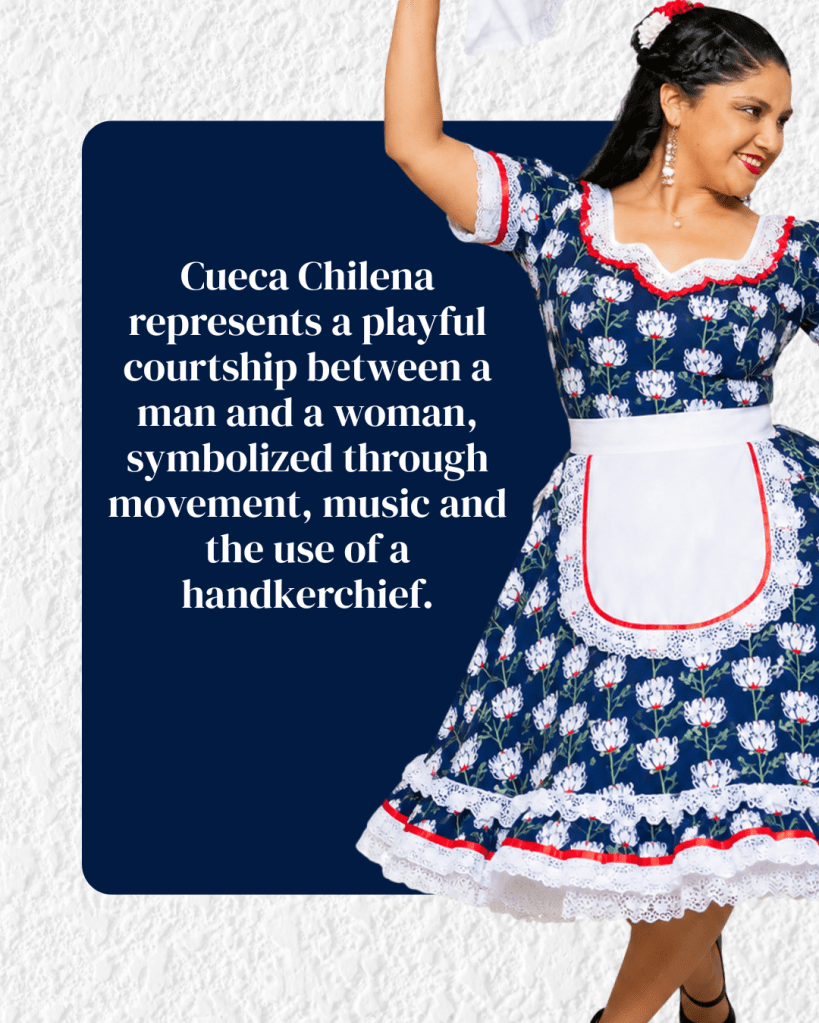
Recognised as Chile’s national dance, Cueca brings together musical composition, singing, instrumental performance, poetry and movement. Each element contributes to a cultural tradition that has been shared, celebrated and passed down through generations.
To truly understand Cueca, we must look beyond the dance steps and discover the stories, people and traditions that bring it to life.
A Tradition with Nearly 200 Years of History
Cueca has a history stretching back approximately 200 years, evolving alongside Chile and its people.
Over generations, it has become an important expression of Chilean cultural identity, reflecting the country’s traditions, communities and changing ways of life.
But Cueca is not simply a tradition from the past.
Today, musicians continue to compose new melodies, singers bring its poetry to life, dancers express its rhythms and families share their knowledge with younger generations.
Cueca is not a tradition frozen in time. It is a living cultural heritage.
More Than a Dance: Music, Poetry and Storytelling
Cueca is both a musical genre and a dance tradition.
Its artistic expression brings together five essential elements:
- Poetry: Verses that tell stories, express emotions and preserve popular language.
- Musical Composition: Melodies and rhythms that give Cueca its distinctive musical identity.
- Singing: Voices that communicate the stories, feelings and character of each song.
- Instrumental Music: Musicians who bring the compositions to life.
- Dance: Movement, expression and interaction that visually interpret the music.
At the heart of all these elements are the people who create, perform, listen, enjoy, teach and share Cueca.
Every song has something to tell us. Its lyrics may speak of love, humour, playful courtship, everyday life, historical figures, places or the social experiences of different generations.
Through these stories, Cueca helps preserve Chile’s collective memory.
When we listen carefully to a Cueca, we are not simply hearing music. We are discovering a piece of Chilean history.
The Different Styles of Chilean Cueca
Chile is a country of diverse landscapes, communities and traditions, and Cueca reflects that diversity.
Over time, different regions and communities have developed their own styles, each with distinctive musical characteristics, interpretations and cultural influences.
Some of the best-known expressions include:
- Cueca Huasa: Associated with the Chilean countryside and traditional rural culture.
- Cueca Campesina: Rooted in rural communities and agricultural traditions.
- Cueca Porteña: Connected to Valparaíso and its distinctive port-city identity.
- Cueca Brava: An expressive style associated with urban popular culture.
- Cueca Chora: Linked to urban traditions and popular neighbourhood culture.
- Cueca Nortina: A regional expression from northern Chile.
- Cueca Chilota: Reflecting the musical and cultural traditions of Chiloé.
- Cueca Austral: Connected to the cultural expressions of southern Chile.
Although these styles may differ in their music, instruments, interpretation and performance, they share a recognisable foundation.
There is no need to ask which style is the only authentic Cueca.
The diversity of Cueca reflects the diversity of Chile itself.
Cueca Is More Than a September Celebration
For many Chileans, Cueca is closely associated with Fiestas Patrias, the national celebrations held every September.
But Cueca does not belong to just one month of the year.
Across Chile, people continue to write, compose, sing, dance, practise and teach Cueca throughout the year.
It is celebrated at family gatherings, cultural events, community activities and performances, while new generations continue discovering its music and traditions.
Cueca has no season. It is part of Chilean culture 365 days a year.
A Living Heritage for Future Generations
A cultural tradition remains alive not simply because it is old, but because people continue to practise, share and recreate it.
Cueca belongs to the composers, musicians, singers, dancers, teachers and families who have kept it alive over generations.
It also belongs to the children taking their first dance steps, the young people discovering its music and everyone learning about it for the first time.
As Chilean society continues to evolve, Cueca evolves with it, while maintaining the characteristics that make it recognisable.
Cueca does not live only in museums or history books. It lives in people.
Sharing Chilean Culture in Australia
At Cueca Classes by Angel Sydney Australia, we believe teaching Cueca means much more than teaching dance steps.
Our mission is to share, celebrate and preserve Chilean culture through dance, music, education and community.
We welcome children, young people and adults from all cultural backgrounds to discover the beauty and meaning of Cueca.
Whether you have Chilean heritage, a connection to Latin American culture or are simply curious to learn something new, you are welcome to become part of this tradition.
Through our classes, workshops and cultural performances, we hope to inspire new generations to appreciate Cueca and help keep this beautiful cultural heritage alive, even thousands of kilometres from Chile.
Because when we understand a culture, we learn to value it. When we share it, we help keep it alive.
Cueca is more than a dance. It is a connection to Chile, its people and its history.
Discover Cueca. Experience the music. Celebrate the culture.